
Lake Biwa's Place in Japanese History
By Kai Howe
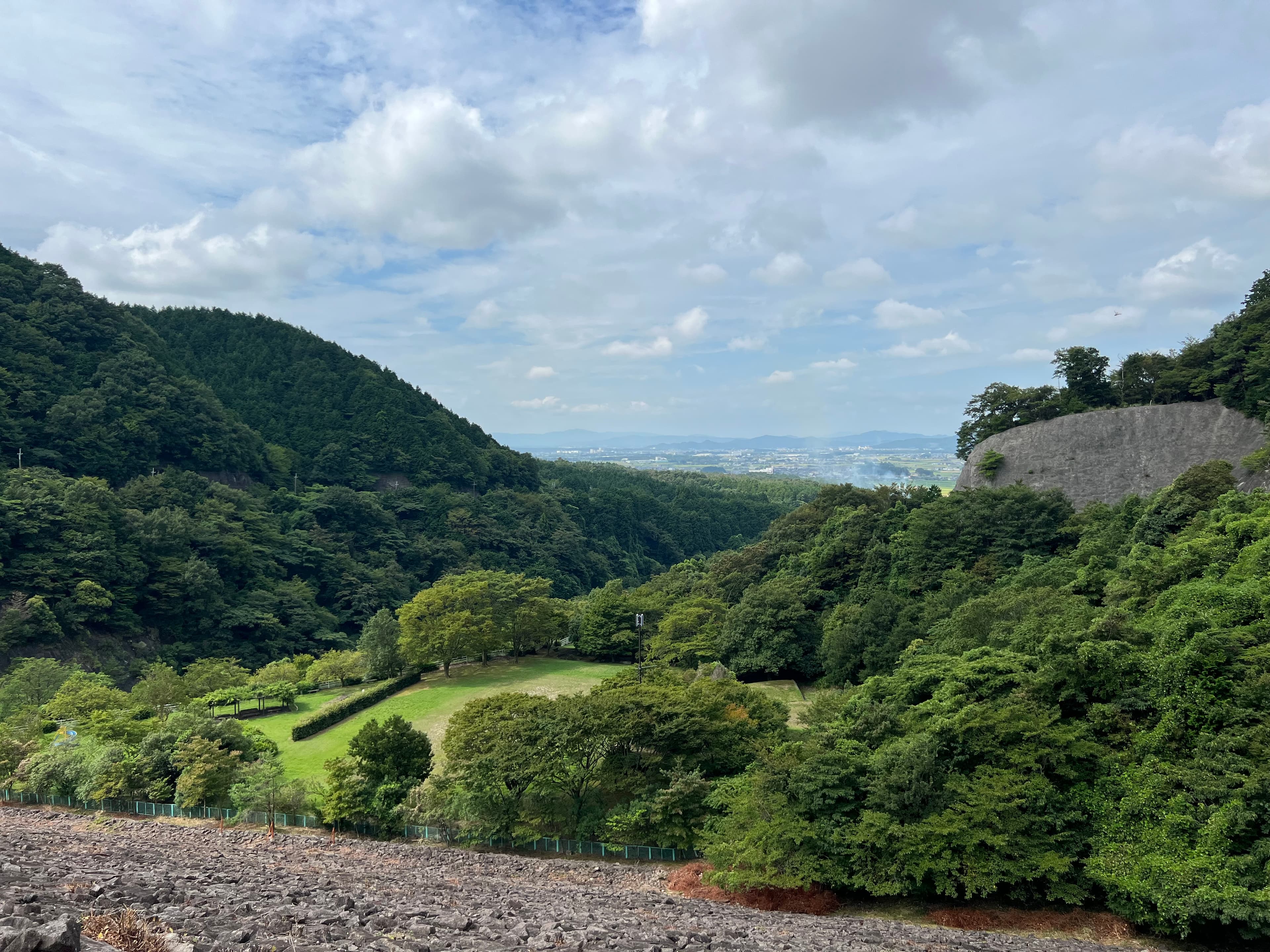
Japan’s largest lake. That is probably what most Japanese people know about Lake Biwa and perhaps that it is a popular place for bass fishing. Many international visitors, however, have never heard of it.
Shiga sits beside Kyoto and along some of Japan’s busiest rail routes, yet most travellers pass straight through it. From the train, Lake Biwa appears briefly between buildings and rice fields before disappearing again. It is easy to see it simply as a large body of water beside Kyoto, rather than as a region with its own culture and unique ecosystem.
Lake Biwa’s geological history stretches back around four million years. The original lake formed farther south, in what is now Mie Prefecture, before geological movement gradually shifted and reshaped its basin. The Lake Biwa we recognise today has occupied its present location for at least 400,000 years, making it one of only around 20 ancient lakes worldwide.
That age has allowed an unusually rich ecosystem to develop. More than 1,700 species of aquatic plants and animals have been recorded in and around the lake, including over 60 endemic species found nowhere else. These include the Biwa trout, the giant Lake Biwa catfish, and several species of fish and freshwater mollusks unique to the lake.
The landscape surrounding Lake Biwa also looked quite different in the past. Its edges were once surrounded by numerous shallow bodies of water known as naiko (small attached lakes), connected to the main lake by rivers and channels. Together with extensive marshes and reed beds, they formed a broad transition between the open water and the surrounding plains.
In the 1890s, these attached lakes covered more than 35 square kilometres. By the late 1990s, only around 5 square kilometres remained. Water-level controls, development, and the postwar reclamation of wetlands for agricultural land caused many of them to disappear.
These shallow waters were not simply empty marshland. They provided important habitats and spawning grounds for native fish, waterbirds, insects, and marsh plants. They also formed part of the everyday landscape for the communities living around the lake.
It would therefore be more accurate to say that Lake Biwa once extended much farther into the surrounding countryside, not necessarily as one continuous body of water, but through a network of wetlands, lagoons, and waterways.
This close relationship between water and land helped create the fertile Ōmi Basin. Rice cultivation around Lake Biwa dates back to the Yayoi period, more than 2,000 years ago. By the Heian period, Ōmi had the fourth-largest area of rice fields in Japan and the largest in western Japan. The region later became an important breadbasket, supplying rice and other agricultural products to Kyoto, Osaka, and the surrounding areas.
The lake was also once at the centre of imperial power.
In 667, Emperor Tenji moved Japan’s capital from Asuka to the southwestern shore of Lake Biwa, in present-day Ōtsu. For five years, the area was the political centre of Japan. After the emperor’s death, an imperial succession conflict known as the Jinshin War broke out in 672, bringing the short life of the Ōtsu capital to an end.
The capital moved away, but Lake Biwa remained strategically important. Sitting beside Kyoto and connecting routes towards eastern and northern Japan, the region became a major centre for the movement of rice, goods, and people.
During the Sengoku period, castles were constructed around the shoreline to control both the roads and the lake itself. Oda Nobunaga and his commanders built or expanded castles at Azuchi, Sakamoto, Nagahama, and Ōmizo, using Lake Biwa as part of an organised transport network.
Control of the lake meant control of trade, communication, and access to Kyoto. Boats carried goods between towns, while roads around the shoreline connected the old capital with other parts of the country. The surrounding landscape was not a quiet backwater, but an important crossroads through which merchants, soldiers, pilgrims, and political figures travelled.
This history is still visible when travelling around the lake today. Castle ruins sit above quiet towns, old highways pass between rice fields, sake breweries remain in communities that prospered through agriculture, and fishing villages preserve traditions shaped by species found only in Lake Biwa.
Some of these places are well known within Japan, but many are easy to pass without noticing. A small road beside a rice field may follow the route of an old highway. A quiet town may once have been an important port. A wooded hill overlooking the lake may contain the remains of a castle that played a role in Japan’s unification.
Once you begin to understand these layers of history, what might initially appear to be typical Japanese inaka (rice fields), farmhouses, ageing shopping streets, and small settlements—starts to look quite different. The landscape has a much deeper connection to the development of Japan than is immediately apparent.
The communities surrounding the lake are still quiet and largely rural. There are rundown shops, empty buildings, and fields stretching between small towns. At first glance, there may not seem to be much happening.
But there is a certain beauty to this countryside. The roads are quieter, the landscape changes gradually, and the mountains remain visible across the water. Rather than being presented through one famous monument or attraction, the story of Lake Biwa is spread across the entire region.
It is in the castle ruins above the shoreline, the canals running beside old houses, the rice fields fed by mountain water, and the fishing villages that have depended on the lake for generations. The more you learn about the area, the more you want to slow down, explore, and understand what happened here.
Lake Biwa is not simply a large body of water beside Kyoto. It is an ancient ecosystem, a former centre of imperial power, a historic transport route, and a landscape that has supported communities for thousands of years.
It is the kind of place that begins to reveal itself when travelled slowly.