
Feeling the Heartbeat of Rural Japan on Two Wheels
By Dale Howe
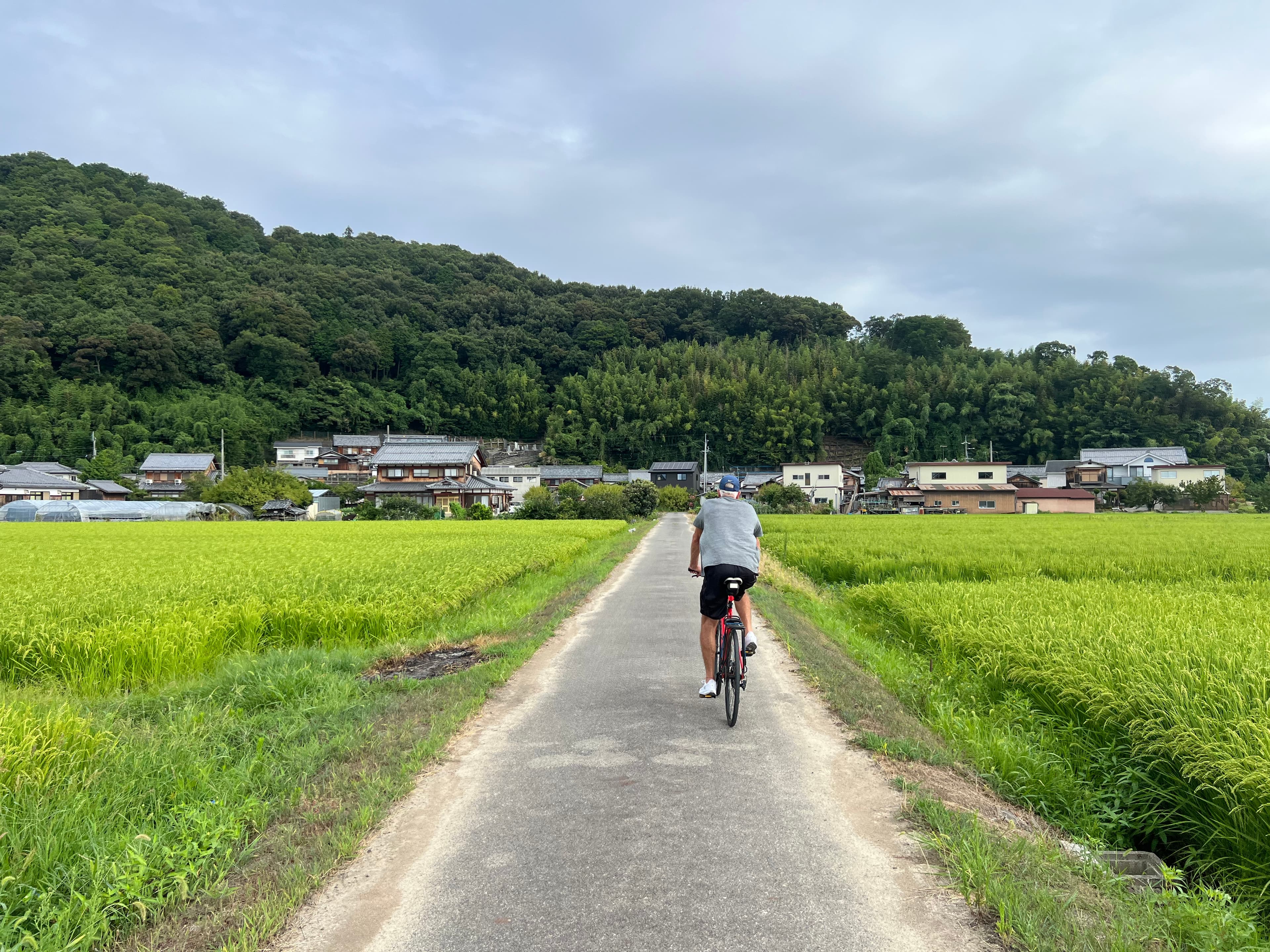
To truly understand rural Japan, you must leave the high-speed transit of the cities behind and adopt a slower, more deliberate pace. While the nation’s sleek Shinkansen (bullet train) offer a marvelous, blurred view of the landscape, they isolate you from the natural environment. To experience the authentic heartbeat of the country, there is no better vehicle than the bicycle. Cycling through rural Japan transforms travel from a series of disjointed destinations into a continuous, sensory narrative, like being engrossed in a novel.
The most immediate shift when turning off the main highways onto rural prefectural roads is the sudden, immersive silence, broken only by the mechanical hum of your chain or the buzzing of semi (cicadas) in the summer. Here, the hyper-modernity of Tokyo fades into a landscape dominated by agriculture and forests. The scenery is defined by the lush beauty of terraced rice paddies. Depending on the season, these fields act either as vast reflective mirrors or as oceans of brilliant, waving green. Traveling by bike means moving slowly enough to notice the elderly farmers tending to their crops, their stoic routines following a lifestyle that has persisted for centuries.
In a 1988 travel piece, writer James Salter described the feeling of travelling through rural Japan as being “lodged between earth and heaven.” It is a phrase that captures the sense of being suspended within the landscape, grounded by the road below and surrounded by the openness above.
Furthermore, a bicycle opens the door to a sensory intimacy that enclosed travel completely denies. To ride through a Japanese village is to breathe in the scent of burning cedar wood from traditional kominka (country homes), the damp, earthy smell of mountain moss, and the crisp, clean air of hidden valleys.
Geographically isolated hamlets that see few foreign tourists often become the stage for spontaneous hospitality. Because a cyclist arrives exposed to the elements, sweat-stained and inherently vulnerable, locals frequently respond with profound kindness. A simple stop at a rural vending machine or a small mom-and-pop grocery store can easily turn into an exchange of warm smiles, bowing, and local travel advice.
This slower pace also reframes the country’s rich history. Instead of visiting curated, crowded monuments in major cities, you stumble upon living history. A forgotten stone Jizō statue, wearing a hand-knitted red cap to protect the souls of children, stands silently at a mountain crossroads. An ancient, weathered Shinto torii gate marks the entrance to a sacred grove of cedar trees, entirely devoid of tour buses. These encounters possess a quiet power because they are discovered rather than scheduled.
As the physical demands of the day draw to a close, the rewards of rural cycling culminate in two Japanese customs: the onsen (hot spring) and the evening meal. There is a profound, almost spiritual connection between spent muscles and the mineral-rich waters of a village bathhouse. The physical exertion of the ride elevates the restorative power of the hot spring from a simple luxury to a therapeutic necessity. This is followed by a traditional dinner showcasing regional cuisine—dishes sourced from the very valleys and rivers you pedaled through hours before.
Ultimately, cycling through rural Japan is an exercise in presence. It forces a reconciliation between the country’s reputation as a futuristic tech giant and its reality as a deeply traditional, nature-worshipping archipelago. On two wheels, the journey ceases to be about how quickly you can arrive and becomes entirely about the meandering paths in between. By choosing the pace of the bicycle, you do not merely observe Japanese life; for a few fleeting kilometers, you become a part of its quiet, enduring rhythm.